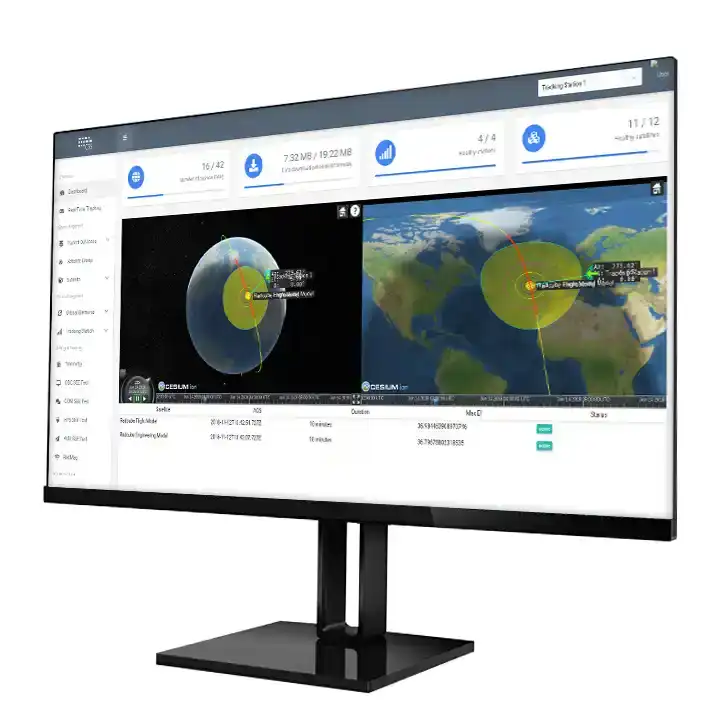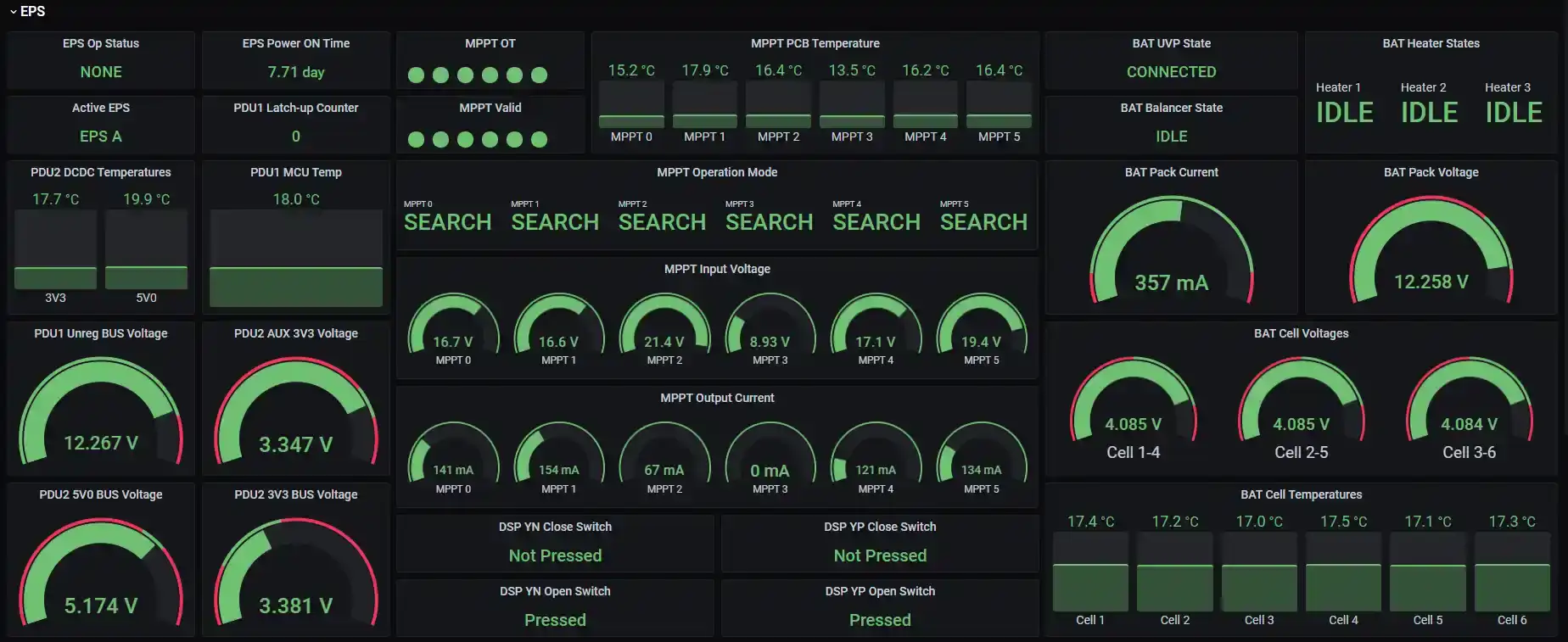
As small satellites become more capable, the software used to operate them has not kept pace. Off-the-shelf mission control tools are rigid and generic, unable to accommodate custom hardware setups or non-standard communication configurations. For our client's two satellite programmes (RADCUBE and VIREO), each satellite was purpose-built with bespoke components, meaning no existing software product could handle their specific operational workflows, testing pipelines, or data integration needs. In short, this was a classic software problem: the client needed a platform that did not exist yet.
The requirements read like a complex SaaS product brief. The client needed a single, browser-based platform to manage the entire lifecycle of a satellite mission, from early hardware testing through to live operations in orbit. It had to integrate with their proprietary ground station (the physical antenna and radio equipment on Earth that communicates with satellites in space), handling real-time antenna positioning, signal processing, and live data visualisation. All data protocols had to comply with CCSDS and ECSS; these are international standards for space data systems, comparable to how HTTP and REST define web communication, but for spacecraft data exchange. On top of that, the system architecture had to be modular enough to support multiple satellites and ground stations simultaneously, with room to scale further in the future.