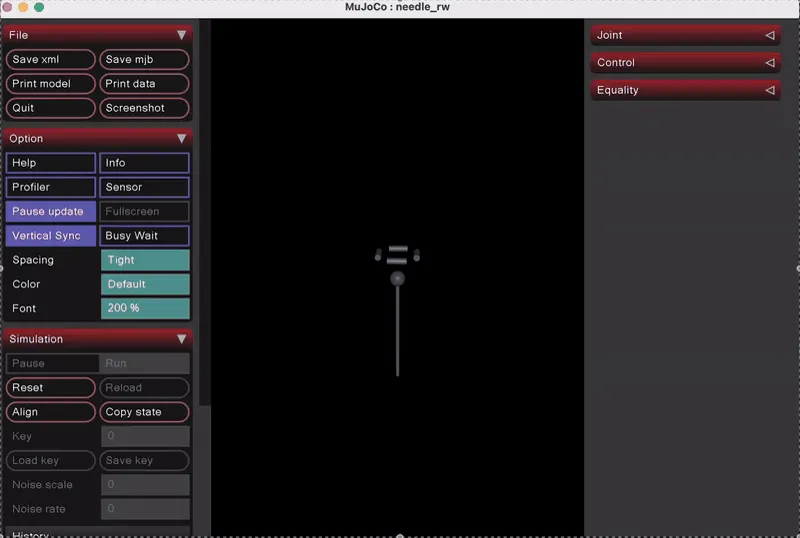
Space Needle's product controls a scientific instrument called a scanning tunnelling microscope (STM for short); a device scientists use to take pictures of individual atoms. It works by hovering an extremely sharp needle, called a tip, about 2 nanometres above the surface being examined. That is roughly one fifty-thousandth the width of a human hair. The tiniest vibration (a passing truck, footsteps in the corridor, even air currents) can make the tip touch the surface and break. In some labs a tip lasts only a few hours and can cost up to €500 to replace, turning high-end microscopy into a fragile, expensive workflow.
Space Needle's idea is to actively cancel those vibrations before they reach the tip, using a small set of fast-spinning flywheels (a concept borrowed from how satellites keep themselves pointed in space). The hard part is not the mechanics; it is the brain. Something has to decide, thousands of times per second, exactly how to move those flywheels to counteract disturbances it cannot see in advance. A traditional, hand-tuned controller is not precise enough on its own; a purely AI-trained controller is not trustworthy enough on its own. Wozify was brought in to build the software that solves both halves of that problem.