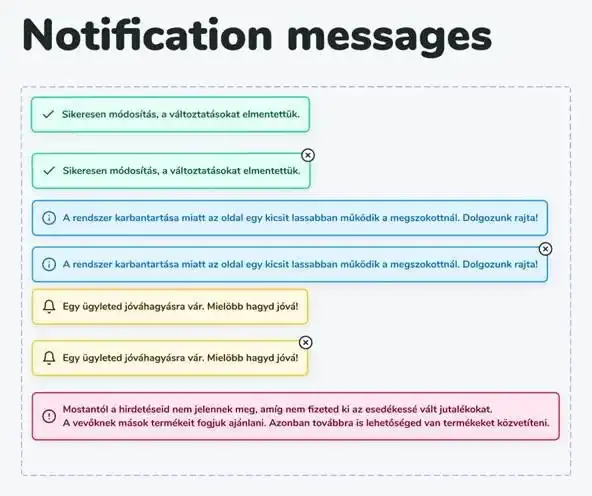
Scoping the MVP. We started by translating Quica's bilingual product brief into an estimated backlog in Azure DevOps, with optimistic, most likely and pessimistic figures for every epic. Together with Quica we trimmed the first release to what mattered for launch: a responsive web application instead of native mobile apps, one payment provider, and features such as ratings, statistics and a public top list moved to later phases. Our project manager annotated the brief point by point so both teams shared one definition of MVP1.
The team. The work was delivered by a cross-functional Wozify team: a project manager, a UX/UI designer, Laravel back-end developers, an Angular front-end team and our CTO overseeing the architecture. We worked in two-week Scrum sprints, with grooming sessions, a Definition of Ready based on the INVEST criteria, sprint demos and a Definition of Done that included an 80% unit test coverage target for the API, peer code review for the parts of the application flagged by the architect, and manual functional tests based on the client's specification.
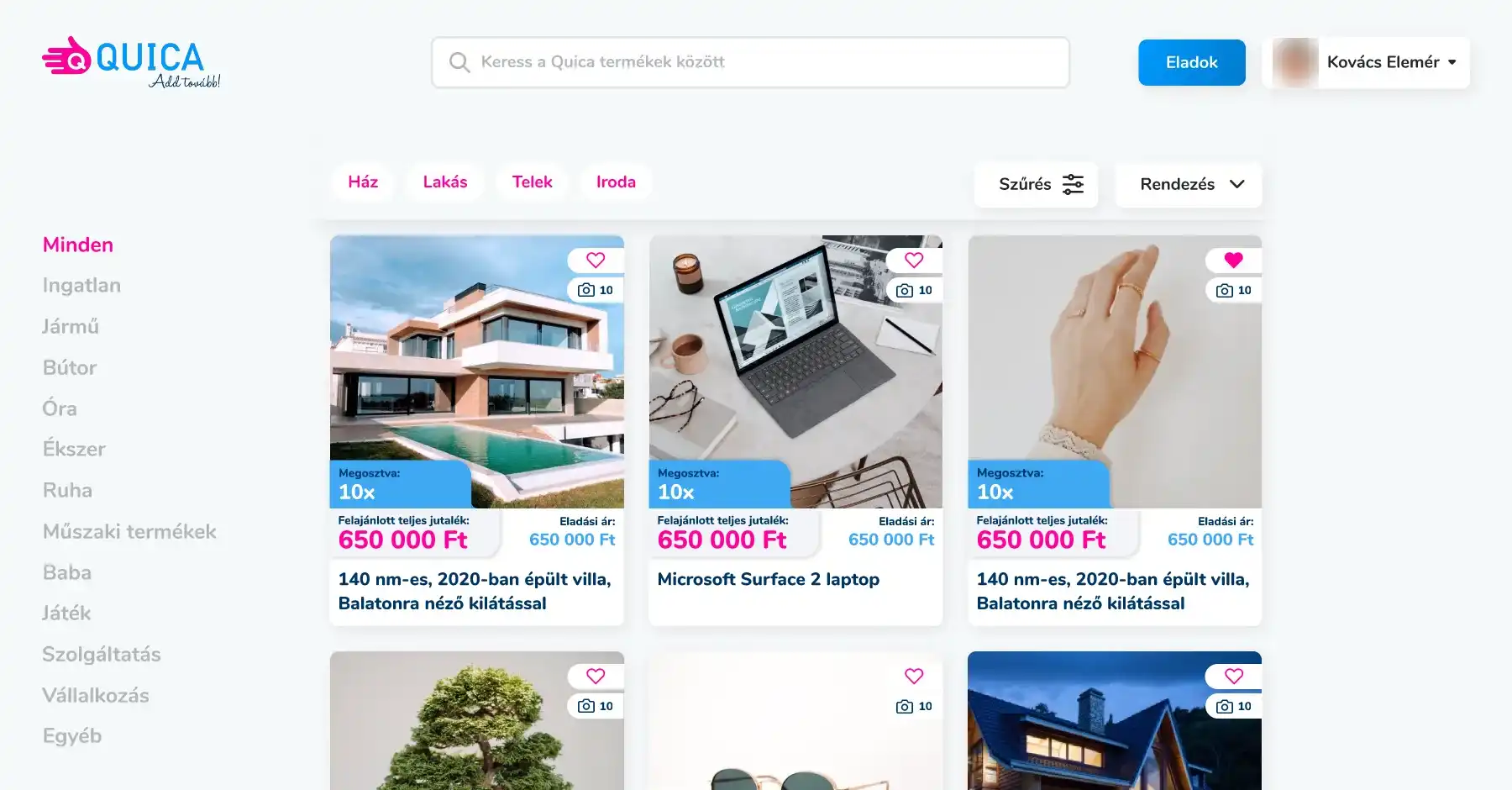
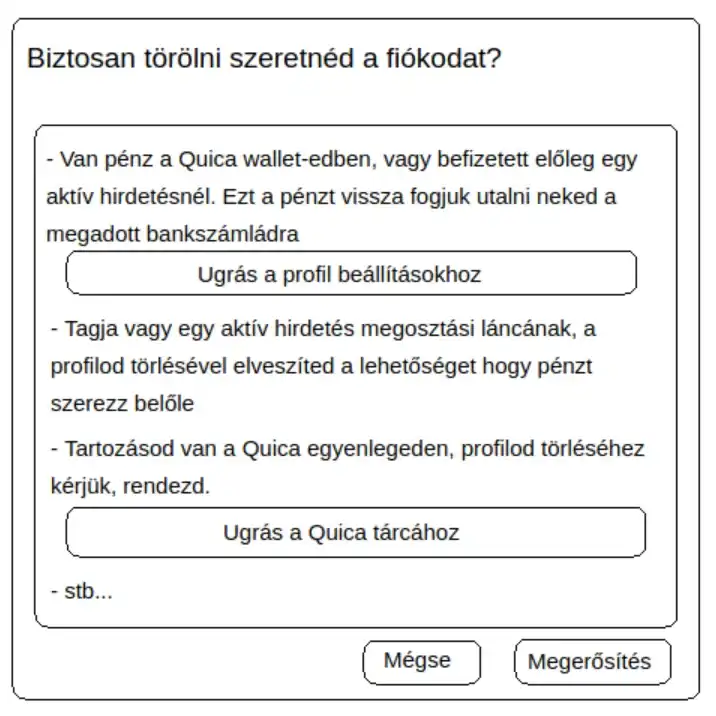
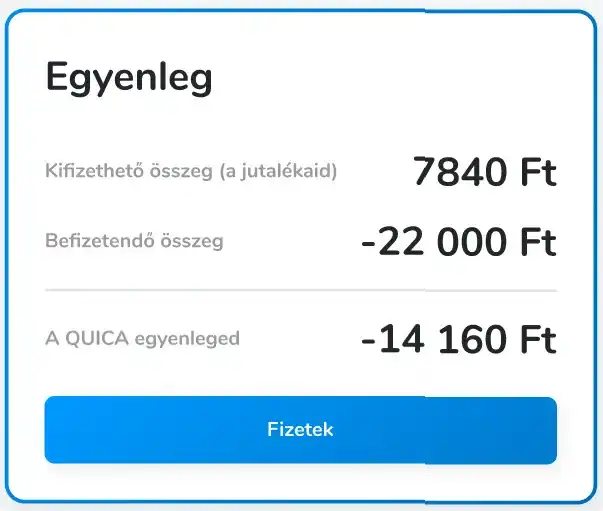
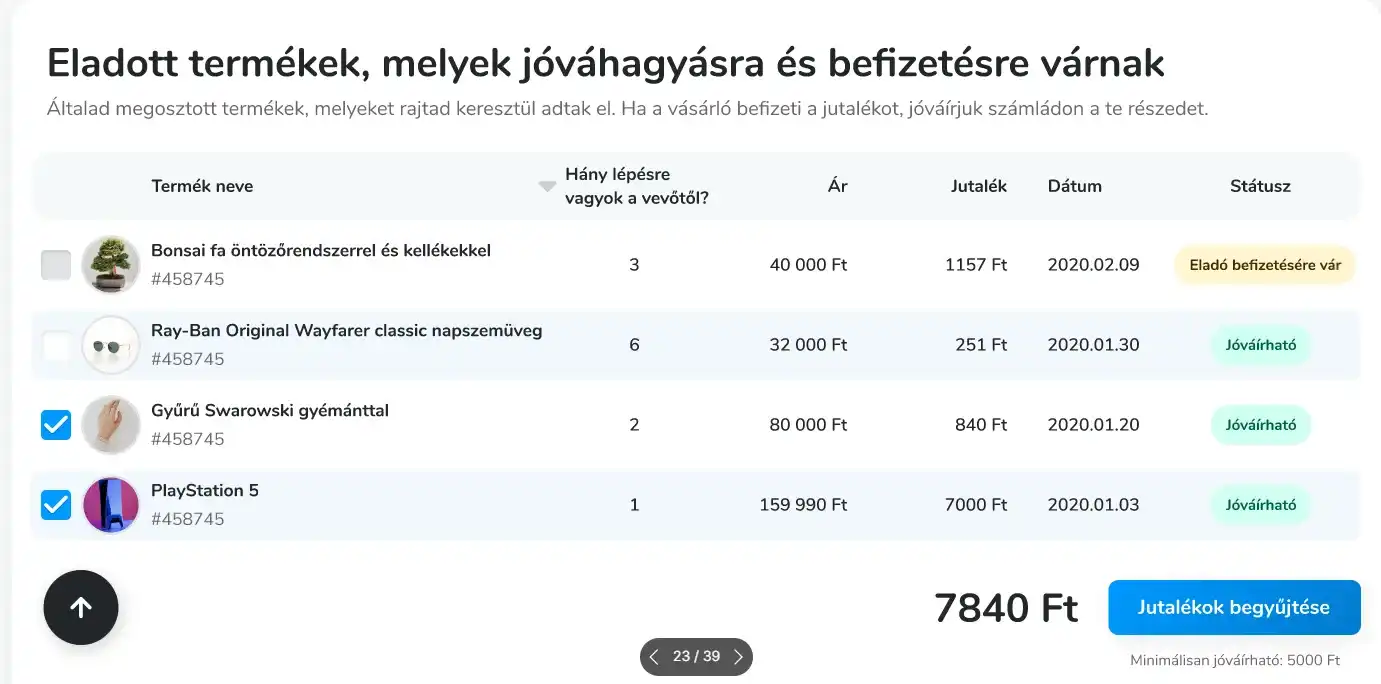
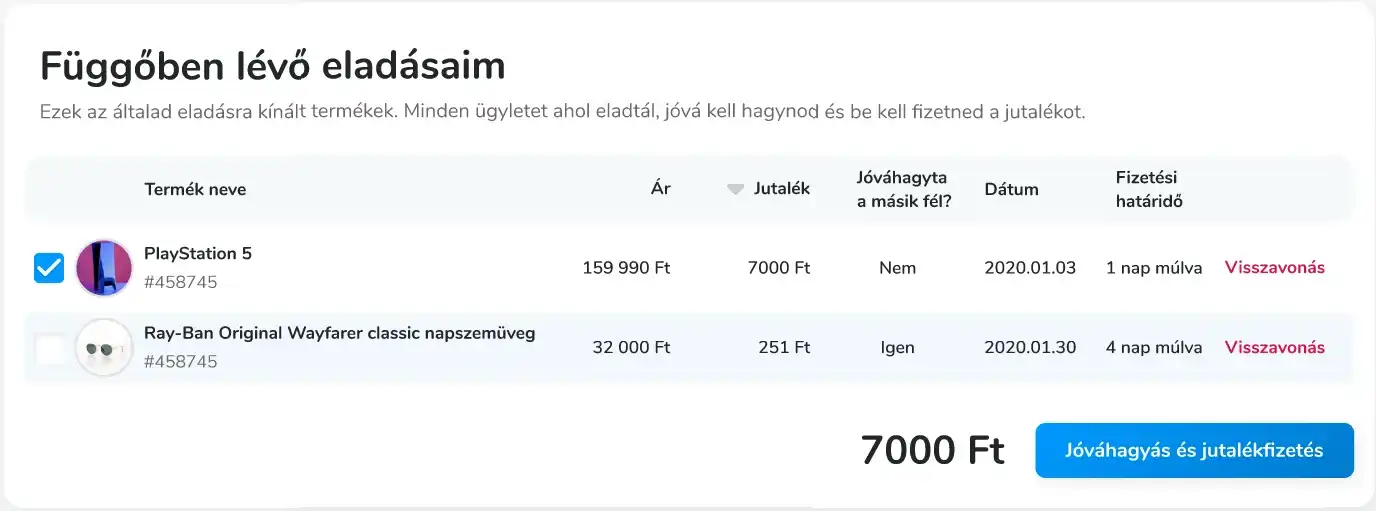
Design. Our designer created the full user interface in Figma: the marketplace home page with category and filter navigation, the listing and sharing flows, the profile and the "Quica tárca" (Quica wallet), where users follow their pending sales, pending purchases, commissions waiting to be collected and their full transaction history. Edge cases were wireframed as well, so the rules behind each screen were agreed with Quica before development.
Architecture. We built an API-first back end in Laravel (PHP), documented with Swagger, and an Angular single-page front end. The API covers users and two-step registration with SMS verification, products with category-specific parameters (real estate, vehicles, furniture, electronics and more), search and filtering, favourites, recommended products, document and image upload to Azure Storage, user and product labels for trust levels, and the commission rules. A parameter table agreed with Quica was imported into the system and exposed through settings endpoints, so values such as commission bands, payment deadlines and fees can be changed without new development. Everything runs on Microsoft Azure, with CI/CD pipelines set up in the first sprint and a staging environment for testing.
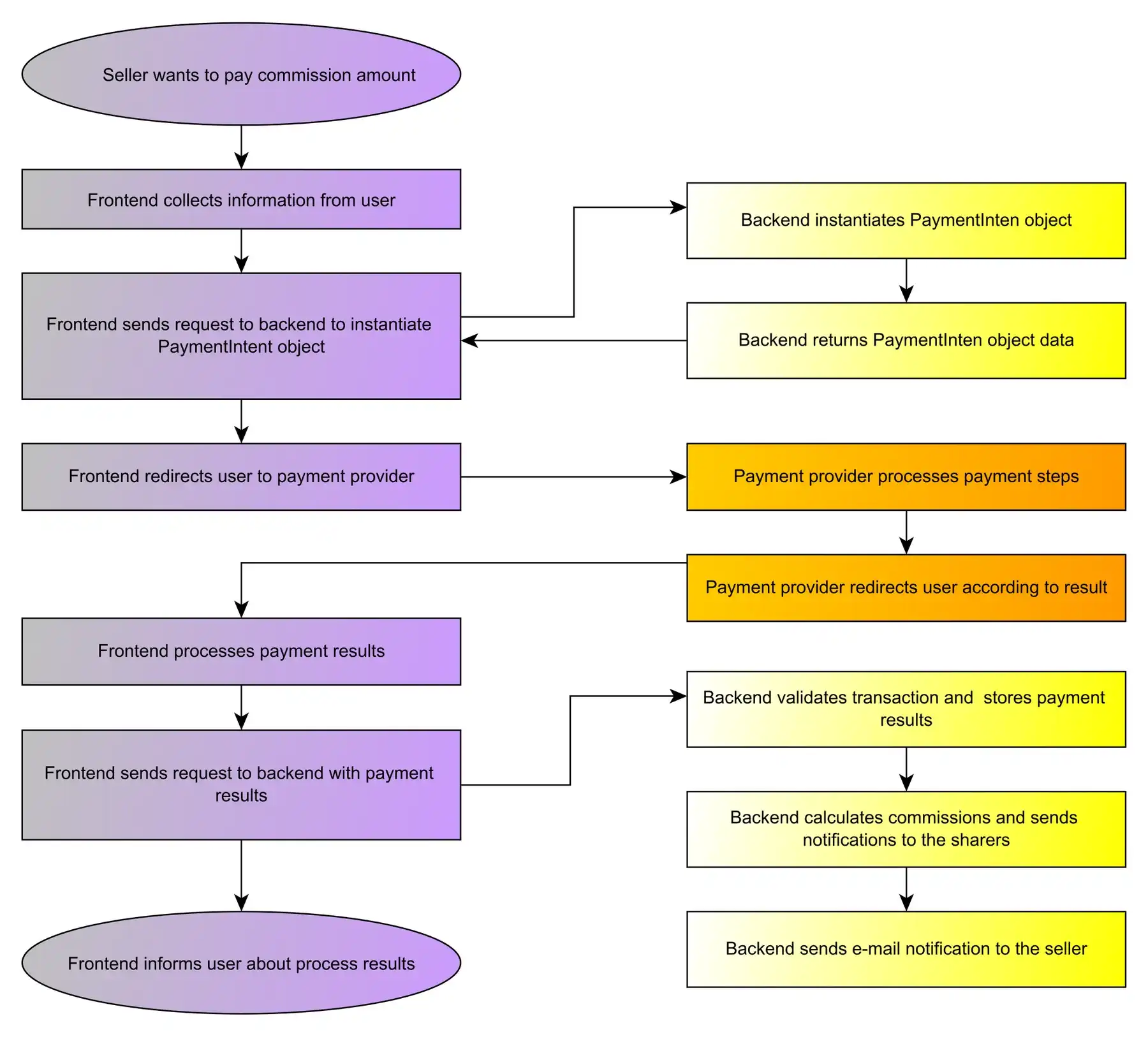
Payments, emails and SMS. Commission payments were integrated with Stripe. The front end requests a payment intent from the back end, the user completes the payment on Stripe, and a webhook reports the successful payment back, so the back end can validate the transaction, calculate the commissions along the sharing chain and notify everyone involved. Transactional emails are sent through SendGrid from multilingual templates stored in the database, and phone numbers are verified by SMS through Twilio.
Back office. An admin site gives Quica's team user management and label management, so users can be marked, for example, as trusted, novice or in payment delay. These labels are the basis of Quica's customer care and collection processes.
Working with Quica's team. Quica's product owner and our project manager shared one Azure DevOps board. When testing began, we set up a simple bug-reporting route with Quica: user reports arrive in Freshdesk, are logged as cards on the Azure DevOps board, prioritised in "TOP PRIO" and "PRIO 2" columns, and closed only after Quica has verified the fix.