SensFish Environmental Intelligence for Seagrass and Coastal Restoration

The Challenge

Seagrass meadows are among the most carbon-dense ecosystems on Earth, sequestering carbon up to 35 times faster than tropical rainforests while supporting coastal fisheries and protecting shorelines from erosion. They are also among the fastest disappearing. In the UK alone, an estimated 92% of seagrass has been lost over the past century.

Conventional seagrass monitoring relies on dive-based surveys that are expensive, seasonally constrained, and impossible to scale. A single survey campaign covers a handful of sites over a few days and produces results that are already months old by the time they reach a decision-maker. For conservation programmes and blue-carbon initiatives that need to demonstrate recovery across entire estuarine systems, this approach simply does not keep pace.

To help address this challenge, SensFish Ltd, a UK marine intelligence SME, is developing proprietary environmental intelligence software for fisheries, coastal ecosystems, and marine restoration applications.

In this project, SensFish led the development of a scalable seagrass habitat intelligence platform integrating environmental data, geospatial analytics, and automated reporting capabilities for a marine steward of Scotland.

Working alongside the SensFish internal technical and environmental intelligence team, Wozify contributed to selected engineering and implementation components of the wider SensFish platform, including geospatial interface development, dashboard functionality, environmental data integration, and operational reporting workflows.

The project aimed to support a scalable seagrass habitat intelligence platform that could complement traditional physical surveys through continuous environmental monitoring, giving restoration stakeholders more operational, evidence-based visibility for coastal ecosystem assessment and reporting within complex coastal monitoring conditions.
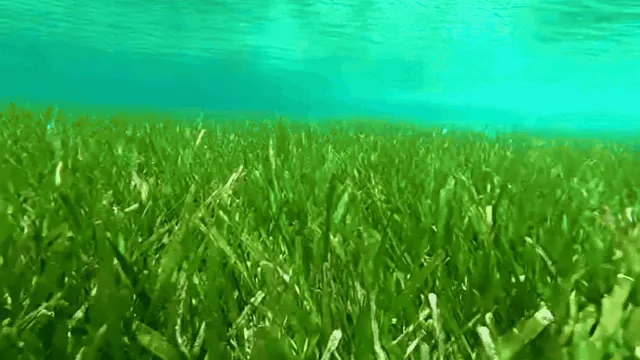
SensFish seagrass habitat intelligence: continuous monitoring of coastal seagrass meadows

The Solution

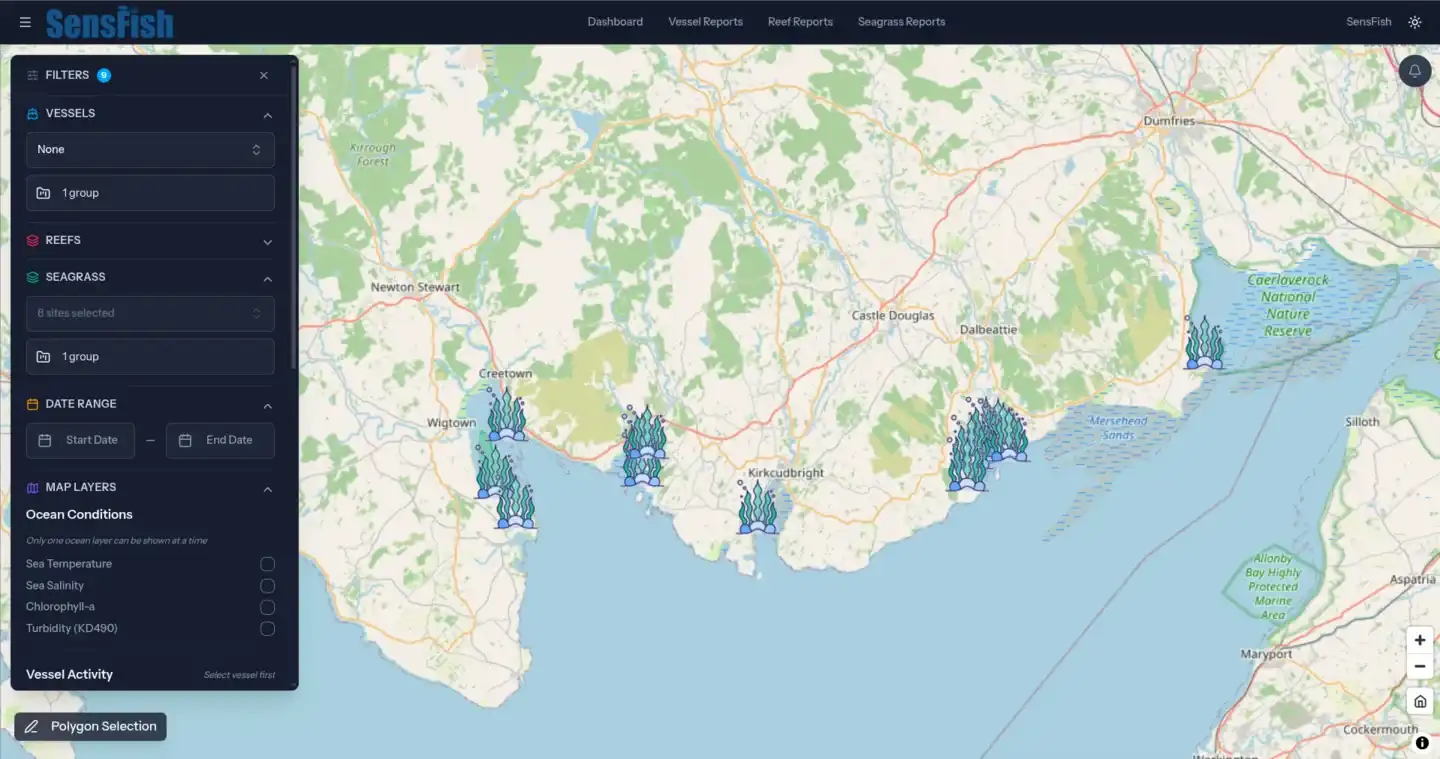
The resulting platform enables users to access continuous habitat observations, environmental trend visibility, site-level monitoring outputs, and reporting tools through a unified operational interface designed for restoration assessment and environmental decision support.

Particular focus was placed on supporting reliable environmental visibility across complex coastal and estuarine environments where monitoring conditions and data availability can vary significantly. The SensFish platform incorporates multiple environmental data layers and confidence-aware processing workflows to maintain transparency in how observations and outputs are presented.

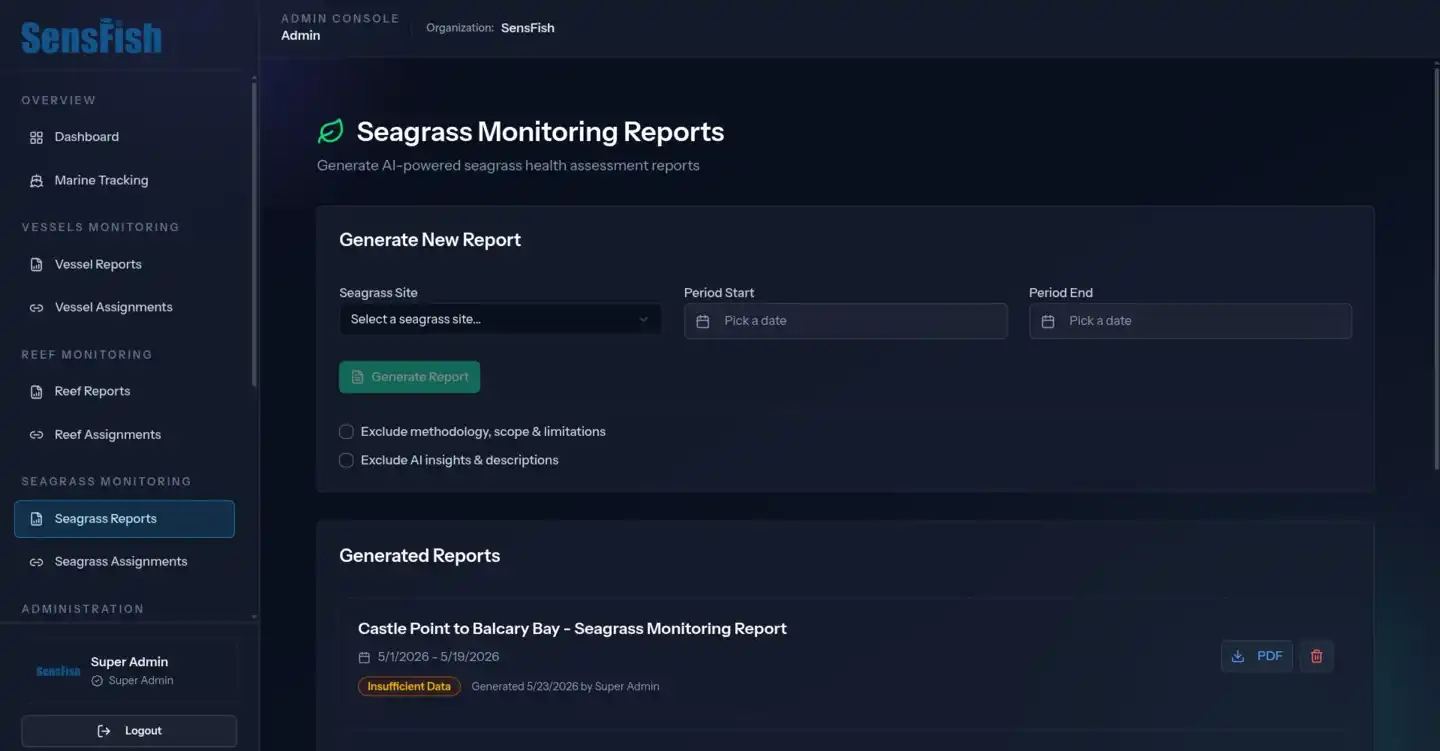
Wozify's engineering contribution focused on the practical integration challenges of bringing environmental and oceanographic data into a coherent operational platform. This included building geospatial visualisation components for the dashboard, developing data ingestion and harmonisation workflows across multiple environmental data sources, and engineering the automated reporting pipeline that converts platform outputs into formats suitable for restoration funding submissions and stakeholder communications.

The platform also supports forward-looking environmental monitoring capabilities and automated reporting workflows designed to assist restoration stakeholders, environmental programmes, and operational monitoring activities.

SensFish geospatial monitoring interface showing seagrass habitat sites and survey areas across the Solway Firth coastline, Scotland

The Result

Wozify supported the continued expansion of SensFish Ltd's coastal habitat intelligence capabilities, enabling regional Scottish restoration stakeholders and environmental teams to access more continuous environmental visibility through a unified geospatial monitoring interface, while contributing to the foundations of a broader long-term coastal restoration and environmental monitoring initiative expected to evolve over the coming decade.

Together with the SensFish internal intelligence team, Wozify contributed to engineering and platform development components supporting geospatial monitoring, environmental data integration, and operational reporting workflows within the wider SensFish environmental intelligence platform.

The resulting platform layer supports integrated habitat observations, environmental trend visibility, monitoring outputs, and reporting workflows designed to assist restoration assessment, stakeholder communication, and operational environmental monitoring activities across complex coastal and estuarine environments.

The project also contributed to the development of scalable technical workflows for integrating environmental and oceanographic datasets within coastal ecosystem monitoring applications.

SensFish seagrass monitoring reports — AI-generated seagrass health assessment reporting with site-level outputs for restoration and stakeholder communication

Project tech stack

React JavaScript library

React

Laravel PHP framework

Laravel

PostgreSQL / PostGIS spatial database

PostgreSQL / PostGIS

Tailwind CSS framework

Tailwind CSS

Python programming language

Python

Long-term Wins

Continued expansion of SensFish Ltd's environmental intelligence platform and marine monitoring capabilities, supporting scalable coastal and restoration-focused operational intelligence solutions.
Improved accessibility of environmental visibility and monitoring workflows for coastal restoration and ecosystem assessment activities.
A reusable engineering foundation for integrating environmental and oceanographic datasets within coastal monitoring applications.
Support for environmental reporting, restoration assessment, and long-term coastal monitoring initiatives through integrated geospatial and environmental intelligence workflows.
Wozify expertise applied across geospatial dashboard development, environmental data integration, and automated reporting workflows in a complex multi-source marine intelligence context.